The Complete Patient Guide to Dental Implants by the Leading Dental Clinic in Mulund
Losing one or more natural teeth creates challenges that extend far beyond aesthetics. It affects your ability to chew your favorite foods, alters speech patterns, and causes gradual jawbone shrinkage that prematurely ages your facial appearance. For patients searching for a permanent, reliable, and natural-feeling solution, modern implantology is the gold standard.
Table of Contents
- What Is a Dental Implant? Anatomy of a Lifelong Restoration
- Dental Implants vs. Traditional Bridges & Dentures: A Comparative Overview
- Feature
- Dental Implants
- Traditional Fixed Bridge
- Removable Partial/Full Denture
- Who Is an Ideal Candidate for Dental Implants?
- The Treatment Journey at Om Dento Care
- FAQs About Dental Implants
- Reclaim Your Bite and Confident Smile Today
Selecting the right Dental Clinic in Mulund ensures your dental implants are planned with digital accuracy, high-grade biocompatible materials, and surgical proficiency. Under the care of Dr. Pranav Thakkar and the multidisciplinary surgical team at Om Dento Care, patients regain complete biting confidence through personalized implant restorations.
What Is a Dental Implant? Anatomy of a Lifelong Restoration
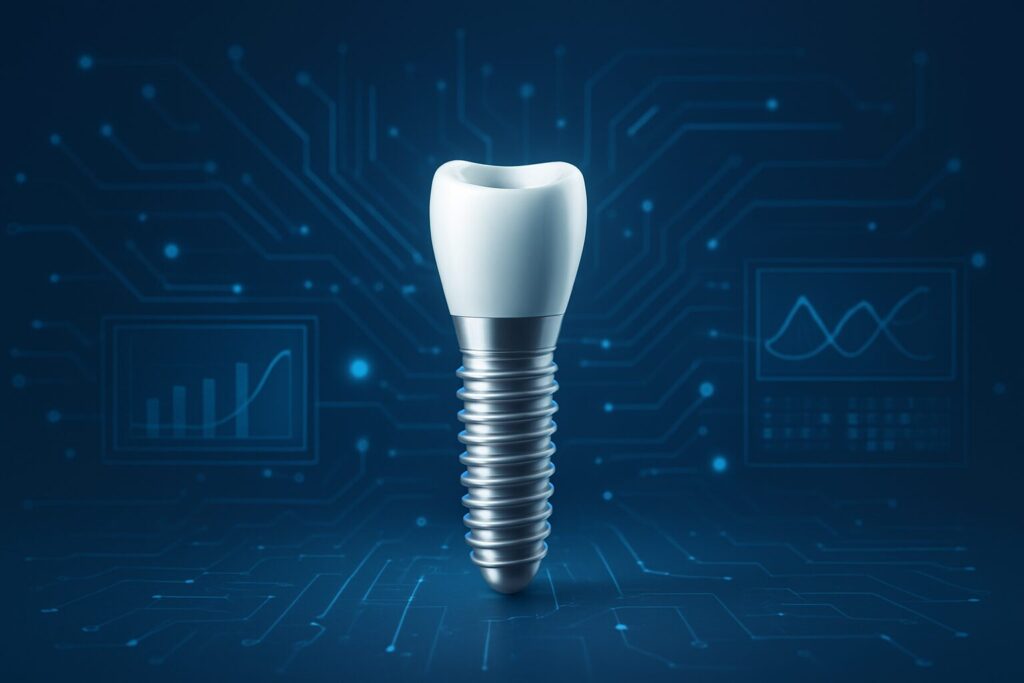
Unlike removable dentures or traditional dental bridges that rest solely on the gums or neighboring teeth, a dental implant replaces the entire anatomical tooth—from root to crown. A complete implant restoration consists of three critical components:
- The Implant Post: A small, threaded screw made of medical-grade titanium or zirconia that is surgically placed into the jawbone. It acts as an artificial tooth root.
- The Abutment: A precision connector piece that sits atop the implant post, emerging through the gumline to securely anchor the replacement tooth.
- The Prosthetic Crown: A custom-crafted, shade-matched ceramic or zirconia crown that looks, reflects light, and chews identical to a natural tooth.
The key to an implant’s lifelong stability lies in a biological process called osseointegration. Over several weeks, living jawbone cells fuse directly with the biocompatible titanium surface, creating a solid anchor capable of withstanding full masticatory forces.
Dental Implants vs. Traditional Bridges & Dentures: A Comparative Overview
Many patients contemplating tooth replacement wonder whether to choose a traditional dental bridge, a removable partial denture, or a modern dental implant.
Feature |
Dental Implants |
Traditional Fixed Bridge |
Removable Partial/Full Denture |
|
Impact on Adjacent Teeth |
Zero (completely independent) |
Requires grinding down adjacent healthy teeth |
Clasps can put stress on supporting teeth |
|
Jawbone Preservation |
Stimulates bone growth; stops resorption |
No bone stimulation under the pontic |
Accelerates bone resorption over time |
|
Biting Efficiency |
95% – 100% of natural bite force |
70% – 80% of natural bite force |
30% – 40% (often slips or causes sore spots) |
|
Maintenance |
Normal brushing & flossing |
Specialized threaders under bridge |
Removal for nightly cleaning and soaking |
|
Expected Longevity |
25+ years to a lifetime with care |
Typically 7 to 10 years before revision |
Relining or replacement every 5 years |
Consulting an experienced Dentist in Mulund helps determine the ideal approach based on your bone volume, gum health, lifestyle, and aesthetic expectations.
Who Is an Ideal Candidate for Dental Implants?
Most adults in good general health who are missing one, several, or all teeth are viable candidates for implant therapy. Key criteria evaluated during your assessment at Om Dento Care include:
- Sufficient Bone Density: The jawbone must possess adequate height and width to support the implant post. For patients with prior bone loss due to long-standing missing teeth, advanced bone grafting or sinus lifts can restore the necessary foundation.
- Healthy Periodontal Tissues: The gums must be free from active periodontal disease to prevent peri-implantitis (inflammation around the implant).
- Controlled Systemic Health: Conditions like diabetes or hypertension must be medically managed to support uneventful healing.
- Commitment to Oral Hygiene: Consistent flossing, brushing, and regular dental checkups are vital to protect the supporting tissues.
The Treatment Journey at Om Dento Care
Getting dental implants at the top Dental Clinic in Mulund follows a systematic, stress-free protocol:
- Comprehensive Diagnostic Evaluation: High-definition radiographic scans and digital impressions map out nerve pathways, bone dimensions, and sinus cavities.
- Computer-Guided Planning: The exact angle, depth, and diameter of the implant are planned digitally for maximum safety and aesthetic alignment.
- Painless Surgical Placement: Using local anesthesia, the implant post is gently positioned into the planned site. Patients report minimal to no intra-operative discomfort.
- Healing & Osseointegration: Over a 3 to 6-month period, bone integrates securely with the implant. In many aesthetic zone cases, a temporary tooth is provided so you never leave with a gap.
- Final Crown Delivery: A custom-shaded, computer-milled crown is fixed onto the abutment, restoring your full smile and bite.
FAQs About Dental Implants
1. Is the implant procedure painful?
No. Dental implant placement is performed under gentle local anesthesia and is generally less uncomfortable than a standard tooth extraction. Post-procedure soreness is typically mild and managed easily with standard pain relievers for 2–3 days.
2. How long do dental implants last?
With proper oral hygiene and routine preventive checkups at your dental clinic, titanium implants can last for decades, often serving patients for the rest of their lives.
3. Can dental implants replace all of my teeth?
Yes. Full-arch solutions (such as All-on-4 or All-on-6 implant bridges) can replace an entire arch of missing teeth with just a few strategically placed implants, eliminating loose, uncomfortable dentures entirely.
Reclaim Your Bite and Confident Smile Today
Do not let missing teeth restrict your diet or make you hide your laugh. Choose Dr. Pranav Thakkar, widely regarded as the Best Dentist in Mulund, for advanced, long-lasting implant solutions. Contact Om Dento Care today to book your personalized dental implant assessment.
Key Takeaways
- Losing natural teeth affects chewing, speech, and causes jawbone shrinkage.
- Dental implants consist of three components: the implant post, abutment, and prosthetic crown.
- Dental implants are independent of adjacent teeth, unlike traditional bridges which require grinding them down.
- Candidates for dental implants must have sufficient bone density, healthy gums, and controlled systemic health.
- The implant placement procedure is performed under local anesthesia and is generally less uncomfortable than tooth extraction.
- Dental implants can last for decades with proper hygiene, and full-arch solutions can replace an entire set of teeth.