Gambling Addiction: Warning Signs Families Often Notice Too Late
What separates frequent gambling from a disorder?
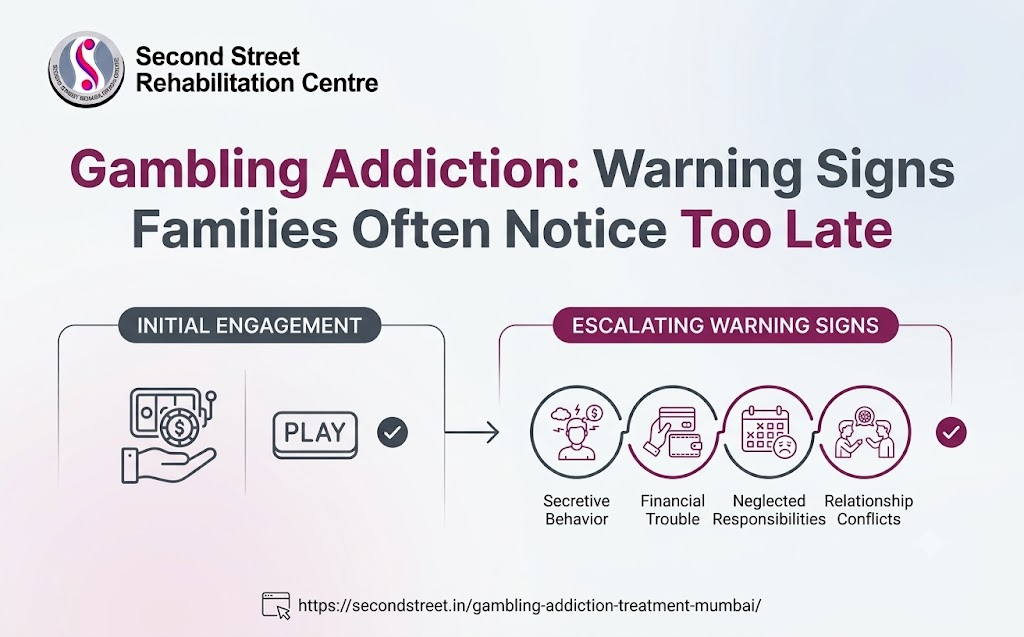
Frequency alone is not enough. A person may gamble often without meeting criteria for gambling disorder, while someone who gambles less frequently may still experience severe harm. The key issues are control, priority and consequences. Does the person repeatedly chase losses? Do they intend to stop after a certain amount and continue anyway? Are household expenses being diverted to gambling? Are work, sleep or relationships being sacrificed? Have they lied about losses or borrowed money to keep gambling? Those patterns deserve attention even before the debt becomes enormous.Why do families often discover the problem late?
Digital gambling can be private. Bets can be placed from a phone, payments can move through multiple accounts and debt can accumulate without cash visibly changing hands. A person may also win occasionally, which makes the overall losses easier to deny. The family may see only the secondary effects: irritability, late-night phone use, sudden financial urgency or repeated explanations for missing money. If several of those changes occur together, ask about gambling directly.Chasing losses is a warning sign, not a financial strategy
After a loss, the urge to “win it back” can make the next bet feel like a solution. In reality, it can deepen the problem because decisions are being driven by the need to reverse an earlier loss. Borrowing to continue gambling is especially concerning because the person is now risking future income as well as current money. A family seeking a rehabilitation centre in Mumbai may be surprised that gambling can need the same level of behavioural and mental-health attention as other addictions. The treatment approach is different from alcohol or drug withdrawal, but the loss of control, secrecy, family harm and relapse risk can be just as serious.What should treatment focus on?
Good gambling addiction treatment should look at triggers, thinking patterns, access to money, digital behaviour, debt stress and co-occurring mental-health problems. Therapy may help the person recognise beliefs such as “I am due for a win” or “one big bet will solve the debt”. Treatment should also address practical access. That can include agreed financial controls, self-exclusion options where available, removing gambling apps and reducing access to credit. These steps work best as part of a broader plan rather than as punishment imposed without discussion.Families need financial boundaries quickly
Do not wait until every rupee is accounted for before protecting essential household money. Rent, school fees, food, medical costs and loan repayments may need to be separated from accounts the person can access impulsively. This is not the same as secretly taking complete control of another adult’s finances. The safest arrangement depends on consent, debt, legal ownership and household risk. Where debt is complex, independent financial or legal advice may be needed alongside treatment. Avoid repeatedly clearing gambling debts without a treatment plan. Paying a debt can stop immediate pressure while leaving the behaviour unchanged.What about shame and suicidal thoughts?
Gambling debt can produce intense shame, fear and hopelessness. Families should take statements such as “everyone would be better without me” seriously. Ask directly about self-harm or suicidal thoughts if you are concerned and seek urgent mental-health help when risk is present. Do not frame the conversation as “How could you do this to us?” during a crisis. There will be time to deal with trust and money. Immediate safety comes first.What does early recovery look like?
Progress may begin with honesty about accounts, stopping new borrowing, attending treatment, reducing access to betting platforms and rebuilding a normal sleep routine. Trust may take longer. For families in Mumbai or Thane, online access means geography does not remove the trigger. A person can avoid a betting venue and still gamble from home at 2 a.m. Recovery planning therefore has to include devices, payments and unstructured time. The earlier a family notices the pattern, the more options remain. Do not wait for bankruptcy or a public crisis to decide that gambling has become serious. Loss of control and continued harm are enough reasons to seek assessment. A useful early question is whether the person is gambling to feel excitement or to repair a previous loss. The second pattern is especially concerning because each new bet is carrying the emotional weight of earlier debt. That pressure can make limits harder to follow and secrecy more likely. Families do not need to calculate the exact lifetime loss before seeking help. If household money is being diverted, borrowing is increasing or the person cannot stop after deciding to stop, the behaviour is already affecting daily functioning and deserves assessment.
Noah Peterson
0
Tags :