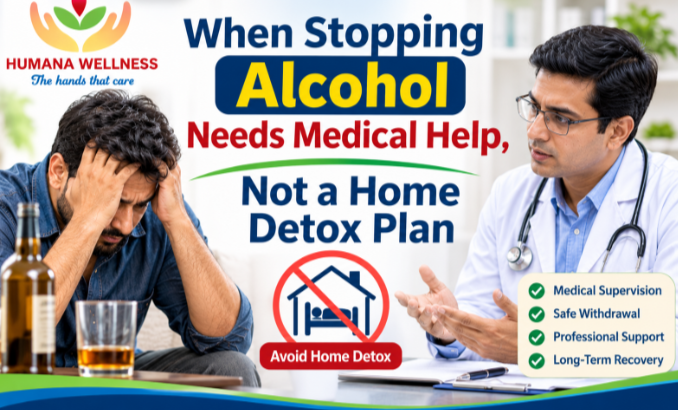
When Stopping Alcohol Needs Medical Help, Not a Home Detox Plan
A person who drinks heavily may decide, after a difficult evening, to stop completely the next morning. Their family may welcome the decision and suggest rest, plenty of water and a few days away from work. Sometimes that response overlooks a serious risk: withdrawal can become dangerous when the body has developed dependence on alcohol.
Not everyone who drinks will experience withdrawal, and the severity cannot be judged from how determined someone sounds. Previous symptoms, the amount and pattern of drinking, medical history and use of other medicines all matter. A qualified healthcare professional should assess a person who may be physically dependent before they attempt to stop suddenly.
Why withdrawal is different from a hangover
A hangover follows drinking and may involve headache, nausea and fatigue. Withdrawal happens when a person whose body has adapted to repeated alcohol exposure reduces or stops drinking. Early symptoms can include shaking, sweating, anxiety, disturbed sleep, nausea and a racing pulse. Some people develop more serious complications, including seizures or severe confusion.
The World Health Organization recommends supported withdrawal for people with alcohol dependence and recognises that people at risk of severe withdrawal may need inpatient care. Families should not try to predict who will be safe by comparing symptoms with those of a friend or relative. A previous uncomplicated attempt does not guarantee that the next one will be uncomplicated.
Someone searching for alcohol dependence treatment may see detoxification described alongside counselling and residential rehabilitation. These are related services, but they have different purposes. Withdrawal management addresses immediate physical risk. Rehabilitation addresses longer-term patterns of use, mental health, daily routines and support for change. One does not automatically replace the other.
Signs that require urgent medical attention
Seizures, marked confusion, hallucinations, collapse, difficulty breathing and a rapidly worsening physical condition require urgent medical assessment. Do not wait for a scheduled rehabilitation appointment. If the person is unconscious or seriously unwell, contact emergency services or go to the nearest appropriate hospital.
Severe withdrawal can occur even when a person genuinely wants to stop drinking. It should not be treated as proof of weak character or lack of motivation. It is a medical problem requiring suitable care.
If someone has previously experienced withdrawal seizures or severe confusion, tell the assessing clinician before any attempt to stop or substantially reduce alcohol. Also mention prescribed sleeping tablets, anxiety medicines, epilepsy medicines and other substances. Mixing or withdrawing from different substances can complicate care.
What a medical assessment may consider
A clinician may ask how often the person drinks, when they last drank, whether they have tried to stop before, and what happened during those attempts. They may check physical observations, consider existing illnesses and assess mental health concerns. The appropriate setting for withdrawal management depends on the risks identified.
Some people can be supported outside hospital with a clinician-led plan and adequate supervision. Others need inpatient monitoring. The family should understand who will observe symptoms, when help is available and what would trigger transfer to a higher level of care. Never use leftover medicines, sleeping tablets or another person’s prescription to manage withdrawal at home.
Treatment decisions, including whether medicine is needed and how it is given, should remain with qualified professionals. A person with poor nutrition or other medical problems may need additional assessment and care. A generic internet detox schedule cannot account for these differences.
What should happen once the immediate risk is managed?
It is possible to feel physically better and still struggle with strong urges to drink. The person may return to the same worries, friendships, working hours or household conflicts. Without continuing support, old patterns can reappear.
A longer-term plan can include psychological treatment, medical follow-up, family support and attention to depression, anxiety or another condition when present. Some people may benefit from clinician-prescribed medicines as part of ongoing alcohol dependence treatment. The choice requires a professional assessment, including consideration of health conditions and potential interactions.
Ask what the service will do if a person returns to drinking after a period without alcohol. A useful response involves reassessing risks and treatment needs, not simply blaming the person. If physical dependence may have returned, any new attempt to stop should again be discussed with a clinician.
Questions before visiting a rehabilitation facility
Ask whether the facility conducts medical assessment itself and what happens when hospital-based withdrawal care is needed. Is a suitable professional available to review symptoms? How are medicines managed? Can the service explain what part of care is medical and what part is counselling? How does it coordinate with other treating clinicians?
The centre gives its address as 1595, Huda Colony, Sector 46, Gurugram, Haryana 122003. Families considering a planned consultation can verify the centre location, but a location listing does not establish that an emergency medical service is available. For severe symptoms, use emergency medical care without delay.
It is also reasonable to ask how the patient and family will receive information about warning signs, follow-up appointments and continuing treatment. The better the explanation, the easier it is to make a safe decision without relying on promises.
Family support without trying to become the doctor
Relatives can help by sharing an accurate account of symptoms and past withdrawal problems, assisting with appointments and providing calm encouragement. They can make the environment safer and avoid offering alcohol or unprescribed medicines as a home solution. They should not be expected to diagnose withdrawal or administer a treatment plan from the internet.
A person may feel embarrassed about needing help to stop drinking. Acknowledge the decision to seek care while being clear about medical risk. Saying ‘We want you to be safe while you stop’ is more useful than treating a difficult withdrawal as something to endure through willpower.
Alcohol dependence is treatable, but the first step sometimes needs to be medical rather than residential. A safe withdrawal plan and a realistic continuing-care plan are both important, and neither should be rushed.
This article is for general education. It is not a detoxification guide. Seek medical advice before abrupt alcohol cessation when dependence is possible, and obtain emergency care for seizures, severe confusion or other serious symptoms.