Why Every Family Needs a 72-Hour Emergency Survival Kit
Introduction
Natural disasters, power outages, and unexpected emergencies rarely come with warnings. In such situations, the first 72 hours are often the most critical period for survival and safety. This is why emergency preparedness experts strongly recommend that every household maintain a 72-hour emergency survival kit.
A well-prepared kit ensures that families can remain safe, self-sufficient, and calm while waiting for emergency services or conditions to stabilize.
The Importance of the First 72 Hours
The first three days after a disaster are typically the most challenging because infrastructure and emergency response systems may be disrupted.
1. Limited access to basic services:
Water supply, electricity, transportation, and communication networks may be temporarily unavailable during floods, earthquakes, storms, or other emergencies.
2. Delayed emergency response:
Emergency services can become overwhelmed or delayed due to widespread impact, making it essential for families to rely on their own supplies.
3. Increased uncertainty:
Stress and confusion are common during emergencies, and having essential supplies ready reduces panic and improves decision-making.
A 72-hour survival kit bridges the gap between the onset of an emergency and the arrival of external help.
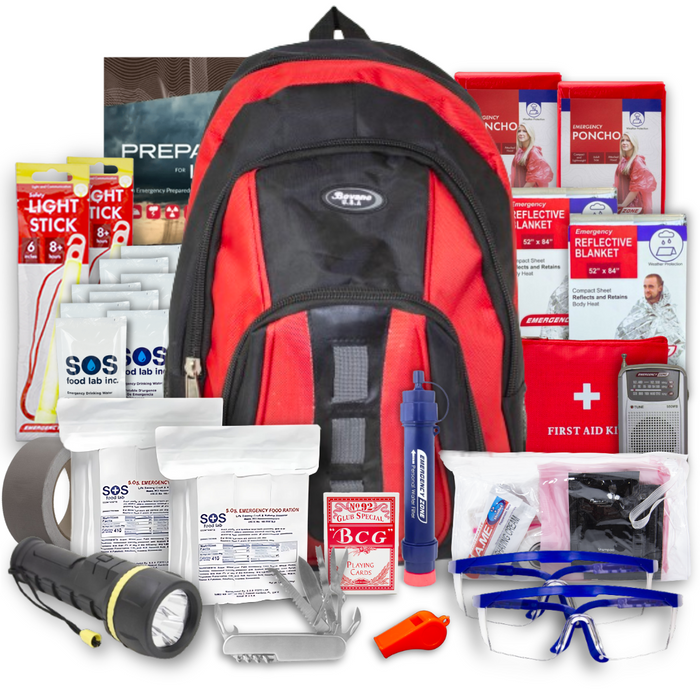
What a 72-Hour Emergency Survival Kit Includes
A well-designed survival kit contains essential items that support basic needs such as food, hydration, medical care, and communication.
1. Water and hydration supplies:
Clean drinking water is the most critical survival resource. Kits often include bottled water or purification tablets to ensure safe hydration when water systems are compromised.
2. Non-perishable food items:
Emergency food bars, canned goods, and ready-to-eat meals provide the necessary calories and nutrients for survival during short-term emergencies.
3. First aid supplies:
A basic medical kit with bandages, antiseptics, pain relievers, and trauma care items helps manage minor injuries and prevent infections.
4. Emergency lighting and tools:
Flashlights, batteries, and multi-purpose tools are essential when power outages occur, allowing families to navigate safely and perform basic tasks.
5. Communication devices:
Battery-powered or hand-crank radios help families stay informed about weather alerts and emergency instructions.
6. Personal essentials:
Items such as blankets, hygiene products, important documents, and medications ensure comfort and continuity of care.
Why Every Family Should Have One
Emergency preparedness is not limited to high-risk areas; disasters can occur anywhere at any time.
1. Protection for all family members:
A survival kit ensures that adults, children, and elderly family members have access to essential supplies when needed most.
2. Reduced panic and stress:
Having a ready-to-use kit eliminates the need to gather supplies during an emergency, allowing families to focus on safety instead of searching for resources.
3. Improved self-reliance:
A 72-hour kit empowers families to take care of themselves during critical situations, especially when external help is delayed.
Real-World Scenarios Where Kits Are Essential
- Natural disasters such as earthquakes, floods, and hurricanes
- Extended power outages caused by storms or infrastructure failure
- Evacuation situations requiring quick relocation
- Road accidents or travel disruptions in remote areas
In all these cases, having a prepared emergency kit can significantly improve safety and survival outcomes.
Conclusion
A 72-hour emergency survival kit is not a luxury; it is a necessity for every household. It provides the essential resources needed to survive the most critical period of an emergency while ensuring safety, stability, and peace of mind.
By preparing in advance, families can face unexpected situations with confidence, knowing they are equipped to handle the first and most important hours of any crisis.